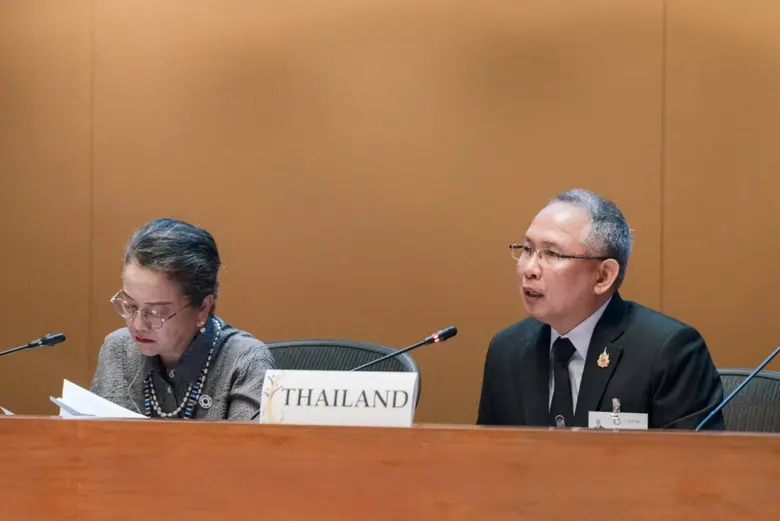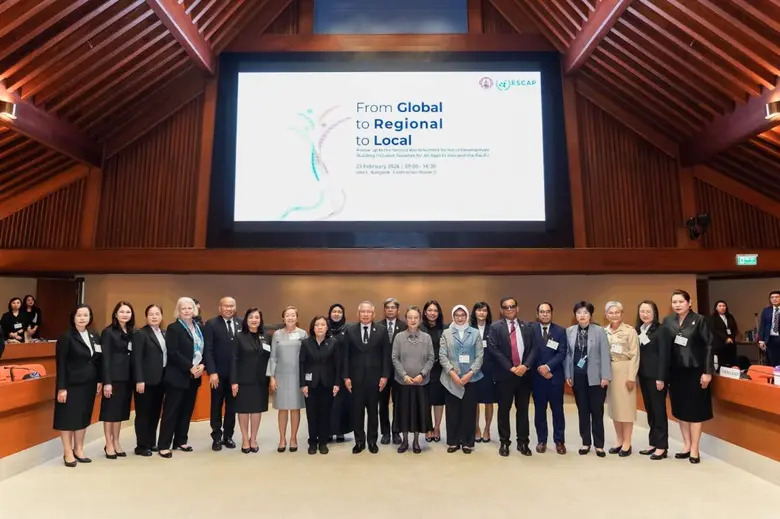
Mr. Kantapong Rangsesawang, Permanent Secretary of the Ministry of Social Development and Human Security of Thailand, delivered the opening remarks at an associated event of the Asia-Pacific Forum on Sustainable Development (APFSD) 2026, held at the United Nations Conference Centre (UNCC), Bangkok, underscoring the urgency of aligning global frameworks with regional priorities and local realities, particularly in response to profound demographic transitions, including rapid population ageing.
The event, "From Global to Regional to Local: Follow-up to the Second World Summit for Social Development - Building Inclusive Societies for All Ages in Asia and the Pacific," convened policymakers, development partners, and multi-sector stakeholders from across the Asia-Pacific region to advance collective action on inclusive social development under the United Nations platform.
Positioning the dialogue within the broader global development agenda, Mr. Kantapong emphasized that the effectiveness of international commitments depends on their translation into concrete policies, delivery systems, and implementation mechanisms at national and local levels.
"This dialogue reflects our shared commitment to ensuring that no one is left behind, by strengthening inclusive social development across all stages of life," he stated.
Building on the outcomes of a high-level dialogue co-hosted by Thailand and ESCAP in Doha in November, the discussions reaffirmed key policy directions to advance inclusive societies. These include adopting a life-course approach, promoting rights-based and people-centred policies, enabling decent work for all ages, expanding inclusive social protection systems and long-term care, strengthening community-based services, and enhancing regional cooperation frameworks.
Mr. Kantapong noted that APFSD 2026 serves as a critical platform to operationalize these priorities, as well as the three pillars of the Doha Political Declaration including poverty eradication, decent work for all, and social inclusion into actionable strategies and practical implementation across all levels.
Thailand is advancing these priorities through a comprehensive life-course approach, ensuring continuity of support from childhood to old age, guided by the principle of "Family First." This approach addresses demographic transitions, strengthens intergenerational solidarity, and responds to evolving care needs within society, while reinforcing resilience at the family and community levels.
He further underscored the importance of whole-of-government and whole-of-society approaches, highlighting that effective social development requires strong partnerships among governments, civil society, international organizations, and local communities. Such collaboration is essential to develop evidence-based, inclusive, and context-responsive policies that can be effectively implemented on the ground.
"Through sustained regional cooperation, we can transform shared commitments into tangible outcomes that improve the quality of life for people at all levels of society," he said.
Thailand also reaffirmed its commitment to strengthening regional cooperation under the Asia-Pacific framework, positioning inclusive social development as a key driver of sustainable development, resilience, and human security in an increasingly complex global landscape.
Mr. Kantapong concluded by calling on all stakeholders to work together in building inclusive societies where people of all generations can live with dignity, security, and opportunity to ensure that development is not only sustainable, but equitable and inclusive for all.